


Winter Garden Checklist
Compiled by Jan Dash, CMG 2023
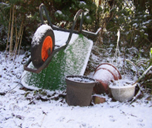 Winter officially began on December 21 and continues through March 21. I decided
to group some helpful gardening tasks into Early, Mid-and Late Winter, corresponding to about the end of January, end of February, and end of March.
Early Winter
- Water trees, shrubs and perennials on days where the temperatures are over 40 degrees. I’ve been watering my newly planted Norfolk Pines and grapevines once a week for the month of December because it’s been so dry and windy. I also refill the 5-gallon watering buckets by my fruit trees every couple of weeks. Check out this publication for winter watering guidelines: https://extension.colostate.edu/resource/fall-and-winter-watering-of-plants-and-trees/
- Clean bird feeders and keep them full of high-fat food such as sunflower seeds, peanuts, and suet cakes. Try to clean the feeders every two weeks with a solution of 9 parts water and 1 part bleach. Rinse and dry the feeders well then refill.
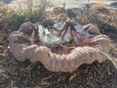 Keep your bird bath clean and full of fresh water. Put the birdbath in a sunny spot and fill it with fresh water every other day. Clean once a month with a water/vinegar solution. I invested in a small birdbath de-icer so I wouldn’t have to break the ice on cold days.
- Watch out for weeds that pop up over the winter, despite the cold. Pull them out by hand or chop them out with a hoe while they’re still small, destroying all the roots. Put down mulch where you pull out weeds to help keep them from returning.
- Mulch perennial beds if you didn’t do it this fall. Put 2 to 3 inches of compost, shredded leaves, or bark mulch on the bed to protect your plants’ crowns and roots. You can even recycle holiday evergreens by cutting branches from your live Christmas tree into 2- to 3-foot sections and using them as mulch. The same goes for wreaths and swags. These lightweight, open branches let moisture reach the soil while insulating the roots and crowns.
- Drain all hoses and drip lines now, if you didn’t do it in the fall. Turn off the water source, drain the hose and drip line, and store them in a safe and dry spot. Cover outdoor faucets with an insulated cover to prevent burst pipes.
- Prepare your greenhouse if you have one. If you didn’t clean out your greenhouse in the fall, early winter is the perfect time. Clean out all trash, leaves, and debris, and patch any holes in the frame. If you keep plants in your greenhouse through the winter, ensure your heating and lighting systems are functioning.
Midwinter
- Continue to water trees, shrubs and perennials on days where the temperatures are over 40 degrees.
- Keep adding kitchen scraps and dried leaves to your compost bin. Don’t put in as much material as you did in warmer months because your compost is still composting, just not as fast. Use shredded paper, cardboard, or straw in place of leaves. Also don’t turn the pile so you retain heat. Remove finished compost and spread over your garden beds.
 Make a garden plan and order seeds while it’s cold and dreary outside. Everyone says to do this, but how many of us really make a plan? I know I’m resolved to do it this winter so I have more success next summer. Decide what you’re going to plant and where you’re going to plant it. Make a map. Calculate how many seeds you’ll need and order them, especially those you plan to start indoors. Order any spring perennials that you know won’t be available locally.
- Prepare your indoor gardening space for seed starting. Make sure you have all the necessary supplies including sterilized pots, starting medium, and plant labels.
- Make plans and measure the spaces for any garden hardscape such as paths, raised beds and fencing and order the materials for delivery before spring.
- Prune trees now while you can see dead, diseased, or damaged limbs more easily. The trees are dormant, so you are not cutting away new growth. Common trees to prune in the winter are fruit trees, deciduous trees, and evergreens.
CSU Publication, The Science of Pruning: https://cmg.extension.colostate.edu/wp-content/uploads/sites/59/2024/10/2024-14-Science-of-Pruning-Full-Section.pdf
Structural Pruning of Young Shade Trees: https://cmg.extension.colostate.edu/Gardennotes/613.pdf
Late Winter
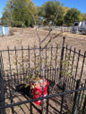 Continue to water trees, shrubs and perennials on days where the temperatures are over 40 degrees.
- Start vegetable and flower seeds indoors so you have transplants ready to plant when the weather warms. Determine the last frost date in your area and start seeds two months before that. In general, peppers, eggplants, broccoli, cabbage, and cauliflower need eight weeks to grow from seed to transplant size, while lettuce goes from seed to transplant in six weeks.
- Protect deciduous fruit trees from diseases and pests by spraying dormant oil on branches and trunks of apple, pear, peach, and other fruit to smother eggs.
- Prune roses by late winter to early spring, around the last frost date. You want to encourage the rose to grow strong roots instead of spending energy on extra stems and leaves. For young roses that only need to be shaped up do a light pruning to remove less than one-third of the plant. For older roses that need better branching do a moderate pruning and cut the plant to 18-24 inches leaving 5-12 canes. For a mature plant that needs a refresh do a severe pruning and leave 3-5 canes at 6-10 inches high. Get the scoop on rose pruning: https://tra.extension.colostate.edu/wp-content/uploads/sites/9/2020/03/Rose-pruning.pdf
- Get your tools and equipment ready for spring. Sharpen lawn mower blades and pruning shears and tune up chainsaws, blowers, lawn mowers, tillers, and other power equipment.
- Apply pre-emergent to control weeds in the lawn and beds.
- Remove any remaining dead vegetation from vegetable beds before new growth begins. Try to leave your perennial beds alone until mid-April or as close as possible to give our beneficial insects a chance to hatch and move on. Many species overwinter in and on the old plant structures from last year.
- Order summer blooming bulbs such as cannas and daylilies.
- Plant potatoes and onions and cool weather seedlings towards the end of March.
- Schedule lawn aeration for April if you think you’ll need it this year.
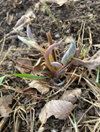 By using this winter gardening checklist, you can maintain a healthy and vibrant garden and set the stage for a successful growing season in the spring.