


Written by: Marge Vorndam
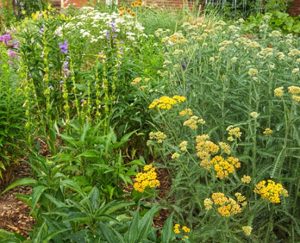
Used by permission – http://resourcecentral.org
Waterwise gardening is a hobby that appeals to many gardeners. Waterwise plants have great characteristics, including seasonal blooms, potential self-perpetuation, lower water requirements, food, shelter and support for bees, butterflies, bunnies and birds. Sometime the “pests” can get out of hand, but that gives us a chance to visit and spend time in the results of our efforts in our own xeriscape gardens.
This year, I’m beginning my journey into growing my own native plants from seeds that I collected from several different wild plants throughout the summer. Raising plant starts from seeds can be quite a challenge and an article (book?) in itself! However, there are very fine waterwise plants already sprouted and growing at nurseries all over our region. Check them out for a quicker start.
Below, I’m sharing Resource Central’s tips in establishing a new wildflower garden. More on Resource Central (RC) later. I was fortunate to catch an online Waterwise Yard Seminar that they presented in July on how to start a Waterwise garden, which of course, is important for final success.
First off, begin small and add your plants to your garden in sequences as you learn what does and doesn’t work for you. After building your bed and deciding on your plants, be sure to check with your Utility Department (dial 811) who can certify that you won’t be cutting through utility lines when you go to plant.
Next, decide on and plan a water-efficient irrigation system to install depending on your final garden design. Don’t use high broadcast/overhead sprinkling, but instead, concentrate on putting water directly above the root zone. Drip irrigation systems are preferrable for this.
One option for reducing the immediate reoccurrence of weeds is to cover the cleared topsoil with cardboard. That’s right. Not landscape cloth. Landscape cloth does not biodegrade, allow enough oxygen and water through, and can become an easy medium for weed seeds to bed themselves into. Cardboard will provide a barrier at first and then biodegrade as the plants get established, allowing the roots to grow deeper over time.
Then, add 6” to 12” of amended soil meant for optimal plant growth. Soils amended with compost are an ideal choice. Don’t use manure as it generally contains a higher sodium content, which can add too many salts to the soil for good plant health. Vermiculite is a type of processed rock that adds aeration to the soil. These soils are available in garden shops and generally in larger quantities at local gravel supply outlets. A note here though, if you’re planting native plant species, you should leave your original soil as the planting medium. Native plants do not like amended soil, especially over time, as it can lead to over-growth, under-growth, shorter lifespans, and poor performance. Non-native, waterwise plants though, may prefer an amended, richer soil option.
The irrigation system goes in next, but keep in mind where your plant roots will be located. It may be easier to put down the main distribution line and add drip emitters as you plant to ensure that you are reaching the root zones. Point-source placement for irrigation saves the most water and reduces evaporation loss into the air.
To ensure that plant roots have optimal growing conditions, plant them in the evening to give the little root hairs a chance to develop overnight when the temperatures are cooler. Some plants have a propensity for spreading over time, so plan a design that allows for this, or be ready to do a lot of pruning.
Mulching is recommended. It reduces evaporation, insulates root systems from major temperature swings, and suppresses weeds. For non-native waterwise plants, 3-4 inches of organic mulch can be recommended. Make sure to provide aeration space around each newly emplaced plant to discourage stem rot until the plant establishes new roots. Native plants can be mulched with organic options like wood chips, pine needles, etc. but the layer should be thinner. Ideally, many native plant species like a rockier mulch and landscape breeze (crusher fines) can do a good job of filling this role. Most of our native plants prefer drier, leaner soils and like the heat so too much organic mulch can have adverse effects.
An automatic watering system that depends on controlled release of water in the evening or early morning is optimal. Typically, these systems for lawns and gardens have irrigation zones that can be set to automatically water sections of lawns and gardens for certain periods of time which are optimal for each hydrozone plant group.
This free Waterwise Yard Seminar presentation is available at https://www.youtube.com/watch?v=aHoJRzVGNZQ .
Resource Central has a wealth of gardening information that augments CSU’s Plant Talk Notes including water conservation services, and lectures on YouTube about all things gardening. Check them out further at http://resourcecentral.org .
Suggestions for xeric plants: https://extension.colostate.edu/topic-areas/yard-garden/xeriscaping-perennials-and-annual-flowers-7-231/ . Plan varieties which will provide a confetti of flower blooms throughout the season.
Also, note that our own SHED group raises and sponsors a garden plant sale in late spring here in Pueblo. Come out next year and check it out.