


Written by: Colorado Master Gardener Di Graski

Looking back on 2025, we are grateful for happy milestones, and one of those was the 50th Anniversary of CSU Extension’s Colorado Master Gardener program. Your very own Pueblo County CSU Extension Horticulture Specialist, Amanda Weidner, was on the planning committee for the super-special annual conference, and five of your fellow Puebloans traveled to Fort Collins for the CMG50 celebration. We want to share all the best tidbits from the CMG conference with you.
First, if any of your 2026 travel plans will take you near Fort Collins between Memorial Day and Halloween, we recommend a visit to CSU’s Flower Trial Gardens. Each year, hundreds of annuals are submitted, planted, and evaluated in the city block bordered by South College Avenue, East Pitkin Street, Remington Street, and East Lake Street. Many of the CMG50 events were hosted in the Flower Trial Gardens, and, oh, what a sight! An added bonus: just across Remington is CSU’s Perennial Garden, which is sure to inspire you.
Pueblo County Master Gardener Diane Finley attended the CMG50 Conference and was particularly impressed with her tour of Hazel Dell Mushrooms. Hazel Dell is an organic mushroom farm, and they are serious about sustainability – not an easy task, considering mushrooms’ favorite environment (moist and warm) is basically the opposite of Colorado’s.
Pueblo County Master Gardener Darla Carlock is still holding on to her sweet memories of touring CSU’s rooftop garden and witnessing many happy pollinators. Darla’s biggest take-away from the conference? “Don’t be afraid to try something new, whether it’s a plant, type of volunteer project, or education. You might just find your favorite new plant or niche.”
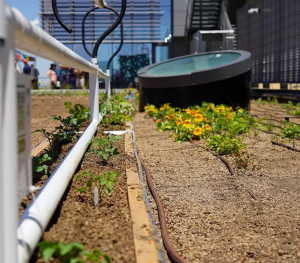
Darla’s experience prompts another horticultural travel tip: Colorado State University’s SPUR Campus, just north of downtown Denver on the National Western Stock Show grounds, is open to the public without charge and is a place to observe research projects including rooftop gardening and agrivoltaics.
The CMG50 Conference session that continues to resonate with me was presented by the nursery manager of the High Plains Environmental Center in Loveland, Stephen Hornbeck. He ethically collects native plant seeds along the Front Range and propagates them. For all who have struggled with germinating native plant seeds, Stephen offered several pretreatment practices to help snap them out of dormancy.
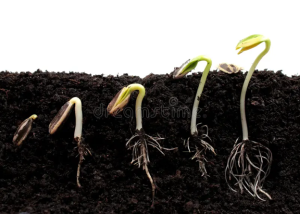
The first step is to research whether your plant seeds are “exo” or “endo.” “Exo” or exogenous seeds require physical breaches in their coating before they germinate. In contrast, “endo” or endogenous seeds rely on hormonal changes triggered by climate before they will germinate. Most typically, these climate clues are winter, but some seeds require wildfire. To figure out what kind of seed you’re dealing with, just a simple Google search on if the seed is exogenous or endogenous should give you an answer you can go with.
For “exo” seeds, an alternative to nicking seed coats with knives or scrubbing them with sandpaper is Stephen’s boil immersion technique. Place your “exo” seeds in a hot-water-proof container, pour boiling water over them, let the seeds soak overnight, and then plant them in seed-starting medium immediately.
For “endo” seeds (which represent about 60% of Colorado’s native wildflowers), cold, moist stratification is one way to mimic winter. Place your seeds in a container of clean, moist sand or perlite and then refrigerate them for at least eight weeks. Another technique is to sow “endo” seeds outside in November (make sure to mark their location).
Stephen has also experimented with leaching (soaking seeds in water and changing the soak water twice daily for several days) and applying gibberellic acid (GA3). For “endo” seeds that require karrikins (plant growth regulators found in the smoke of burning plants) before germinating, Stephen has actually had some luck using the seasoning Liquid Smoke!
In the program’s fiftieth year, Colorado Master Gardeners number more than 1,500, spread across 46 of Colorado’s 64 counties. We invite you to enjoy a short video highlighting some of the unique community projects these CMGs provide: “Bigger Than Backyards.” And your Pueblo CMGs look forward to seeing you in 2026 at the Western Landscape Symposium, All Pueblo Grows workshops, Farmers Markets, Seed Libraries, Edible Gardens, Demonstration Gardens, and on the Help Line.
Resources to Learn More
“Bigger Than Backyards: the 50th Anniversary of Colorado Master Gardeners,” https://vimeo.com/1109719820/8eddd42e2f
Colorado State University’s Flower Trial Gardens: https://flowertrials.colostate.edu/
Colorado State University’s Green Roof Research: https://agsci.colostate.edu/spur/green-roof-research/
Colorado State University’s SPUR Campus: https://csuspur.org/visit/
Hazel Dell Mushroom Farm: https://www.hazeldellmushrooms.com/
High Plains Environmental Center: https://suburbitat.org/